






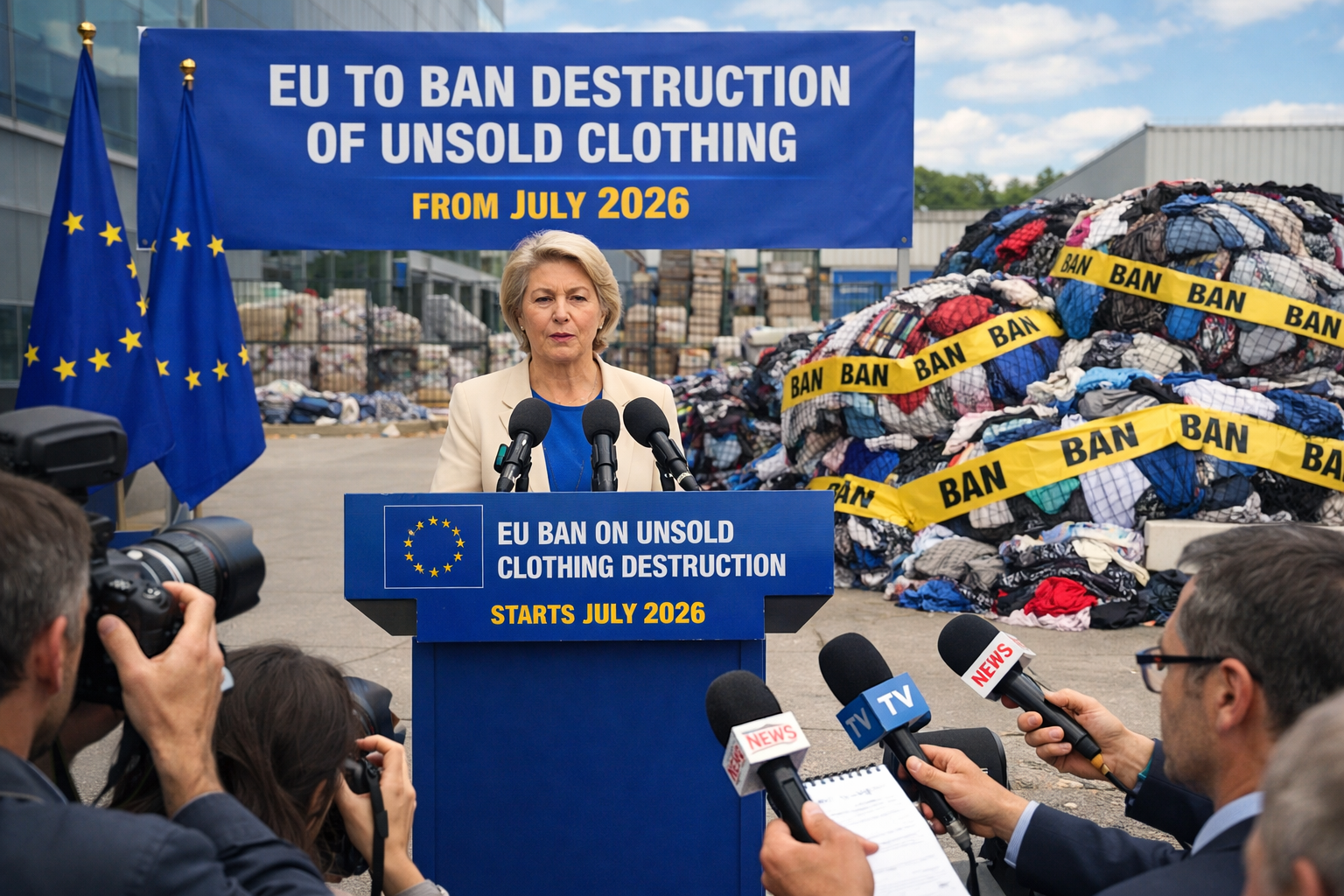
From 19 July 2026, large companies in the EU will be prohibited from destroying unsold clothing, accessories and footwear, with the rule extending to medium-sized businesses by 2030. Under the Ecodesign for Sustainable Products Regulation (ESPR), companies must focus on reuse and recycling instead of disposal, alongside mandatory reporting of discarded goods beginning in February 2027.
The European Commission has introduced new measures under the Ecodesign for Sustainable Products Regulation (ESPR) to stop companies from destroying unsold clothing, accessories, and footwear. These rules aim to reduce waste, lower environmental harm, and support businesses shifting toward more sustainable and circular practices.
- Effective Dates: Large companies must comply by 19 July 2026, with medium-sized enterprises following by 19 July 2030.
- Scope: Primarily impacts textiles, apparel, and footwear, targeting “fast fashion” waste.
- Destruction Ban: Direct destruction (dumping/burning) of safe, unsold products is banned. Exceptions exist for damaged or unsafe items.
- Reporting Requirements: Starting February 2027, companies must disclose the volume, weight, and disposal methods of discarded unsold goods via a standardized EU format.
- Goal: To push companies towards better inventory management, donation, reuseor resale of overstock. Currently, around 4–9% of unsold textiles in Europe are discarded each year, generating about 5.6 million tonnes of CO₂ emissions. To address this, companies will be required to report how much unsold stock they throw away, and a ban will be placed on destroying such items.
Additional guidelines clarify when destruction may still be allowed (e.g., for safety or damaged goods) and introduce a standard reporting format starting in 2027. Large companies must comply with the ban from July 2026, while medium-sized businesses will follow by 2030.
The EU encourages companies to adopt alternatives like resale, reuse, repair, or donation instead of disposal. These steps are part of a broader push to make products more durable, recyclable, and environmentally friendly, while strengthening the EU’s move toward a circular economy.