Footwear Industry Feels the Heat of Iran–US War Disruptions
BY Aryan Chopra
April 2, 2026
0
Comments
1.19K Views
Read in 4 Minutes
The ongoing 2026 Iran–Israel conflict has triggered a major disruption in India’s footwear sector, placing significant pressure on manufacturers across the country. With supply chains strained and input costs rising sharply, the industry is facing one of its toughest phases in recent years.
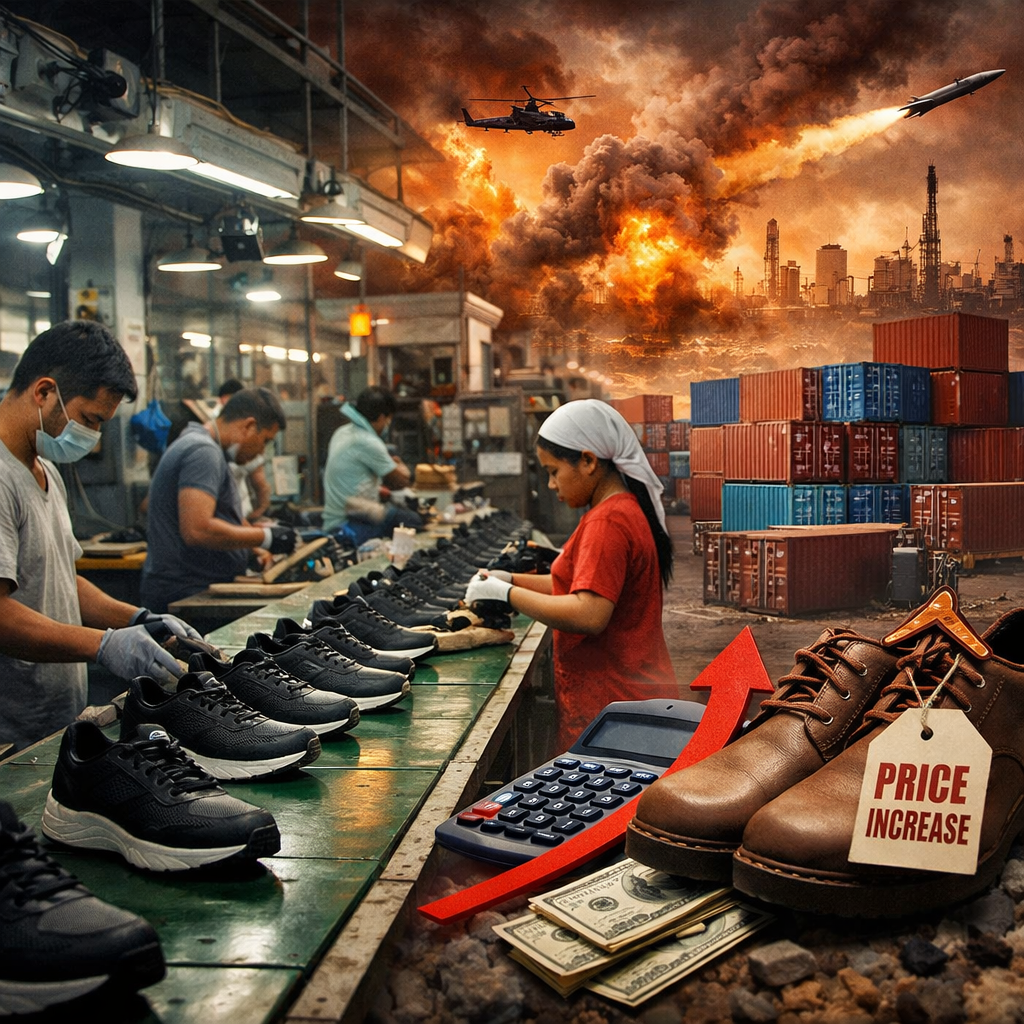
A key concern has been the shortage of petrochemical-based raw materials such as PU, EVA, PVC, and rubber. These materials, essential for large-scale footwear production, have seen price increases of up to 50 percent. As a result, production costs have surged, making it increasingly difficult for manufacturers to sustain operations at previous price levels.
V. Noushad
“The current disruptions across petrochemical supply chains and global logistics are beginning to place tangible pressure on India’s footwear ecosystem. What started as delays is now translating into constrained availability and sharp cost escalations, particularly impacting MSMEs. While the industry is striving to maintain stability and absorb shocks, sustained volatility could challenge production continuity and export competitiveness. At this juncture, coordinated support across government, industry, and supply networks will be critical to safeguard growth momentum.” V. Noushad, National President of the Confederation of Indian Footwear Industries (CIFI) and Managing Director of Walkaroo International Pvt Ltd.
To offset these rising costs, footwear producers in regions such as Haryana and Kerala have begun implementing price hikes ranging between 10 and 20 percent on finished goods, effective from late March 2026. However, price revisions alone have not been sufficient to stabilize margins.
Kuldeep Kohli
“The ongoing Iran–Israel tensions have directly raised input and logistics costs for India’s footwear industry, which translates into costlier raw materials and delayed deliveries, impacting both exports and domestic pricing. While the situation is serious, it may not yet be the most challenging phase but if the conflict escalates or prolongs, it could become one of the toughest periods in recent years, especially for cost-sensitive, export-driven players.” Kuldeep Kohli, President FAFM
Production activity has also taken a significant hit. Major manufacturing hubs like Bahadurgarh in Haryana and Agra in Uttar Pradesh are witnessing sharp declines in output. Bahadurgarh, which contributes approximately ₹30,000 crore annually to the industry, has reported production drops of up to 40 to 60 percent. These declines are largely attributed to raw material shortages and ongoing supply chain disruptions.
Dipika Chopra
“As the conflict intensifies, its impact on the Indian footwear industry is being felt across the board. The industry operates on tight margins and rising input costs, coupled with logistics uncertainties, are putting significant pressure on manufacturers, exporters and retailers alike. This is not just a short-term disruption but a structural challenge that could reshape sourcing, pricing and trade dynamics if the situation persists.” Dipika Chopra, Director Shoes & Accessories
Export-oriented segments are facing additional challenges. Leather footwear exports, particularly from Uttar Pradesh to key Middle Eastern markets, are under threat due to cargo disruptions and logistical uncertainties. Exporters are increasingly concerned about delayed shipments and potential order cancellations.
Sanjay Gupta
“With demand softening and input as well as logistics costs surging, the industry is under significant stress—timely policy support is critical to sustain competitiveness and protect jobs.” Sanjay gupta, President IFCOMA
Adding to the strain, transportation costs have risen as shipping routes across the Gulf region experience instability. Freight rates have increased by 7 to 10 percent, further squeezing already tight margins.
The impact of the crisis is being felt most acutely by micro, small, and medium enterprises. With limited financial buffers, many MSMEs are struggling to cope with escalating input costs, reduced production capacity, and weakening demand conditions.
Ketan Vyas
“Crude-linked inputs EVA, PU, rubber compounds, adhesives, even packaging have surged with rising oil prices, while freight and insurance costs are squeezing margins across the value chain. At the same time, logistics disruptions, rerouting and war-risk premiums are unsettling sourcing cycles and making time-bound exports to affected regions nearly unviable. However, whether it becomes a prolonged crisis will depend on how long energy markets remain volatile because this is less a demand problem and more a cost and supply-chain shock driven by geopolitics.” Ketan Vyas, Md- PRO
As the situation continues to evolve, the industry remains on edge, closely monitoring geopolitical developments while seeking ways to navigate the mounting operational challenges.
ACDC Group, India’s leading B2B footwear and accessories publisher, drives industry growth through flagship publications, events, policy dialogues and global linkages.